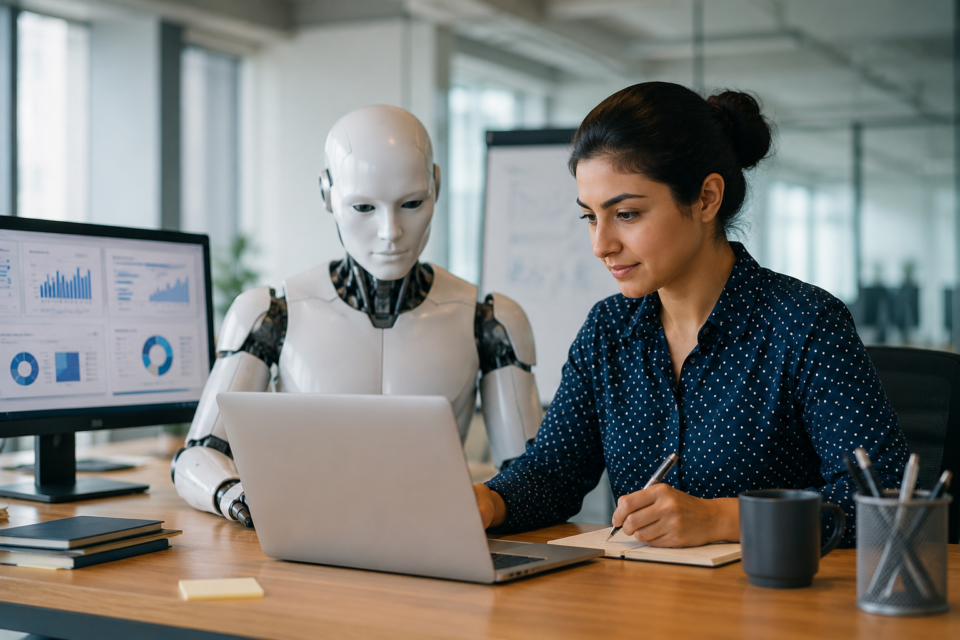
A major transformation is taking place inside modern organizations—the rise of the Synthetic Workforce. Businesses are no longer using AI only as a tool for automation; they are beginning to treat AI systems as active participants in daily operations.
From virtual analysts and AI copilots to autonomous digital assistants, organizations are entering an era where humans and AI systems work side by side.
What Is a Synthetic Workforce?
A synthetic workforce refers to a network of AI-driven systems, digital agents, and intelligent assistants that perform operational, analytical, and decision-support tasks alongside human employees.
These systems can:
- Analyze data in real time
- Generate reports and insights
- Automate workflows and approvals
- Coordinate tasks across departments
- Assist employees with complex operations
Unlike traditional automation, synthetic workers are becoming more adaptive, context-aware, and collaborative.
Why This Shift Is Happening
AI Capability Growth
Modern AI systems can now handle more advanced and multi-step tasks.
Operational Efficiency Pressure
Organizations are seeking ways to improve productivity while reducing costs.
Talent & Skill Shortages
AI systems are helping fill gaps in repetitive and time-intensive workflows.
Always-On Business Expectations
Digital operations increasingly require continuous support and execution.
Where It’s Already Emerging
Customer Support
AI assistants handling large volumes of user interactions.
Enterprise Operations
Digital agents managing scheduling, workflows, and reporting.
Data & Analytics
AI systems generating insights faster than manual teams.
Software Development
AI copilots assisting with coding, testing, and debugging.
Business Impact
The Synthetic Workforce Era is changing how organizations operate:
- Faster execution and decision-making
- Increased operational scalability
- Reduced manual workload for teams
- Improved efficiency across workflows
Human employees are shifting toward more strategic, creative, and supervisory roles.
Challenges to Consider
Despite its advantages, this shift introduces new concerns:
- Managing trust and accountability in AI decisions
- Workforce adaptation and reskilling
- Overdependence on automated systems
- Data privacy and governance risks
Organizations will need balanced frameworks to integrate AI responsibly.
The Road Ahead
The future workplace will likely consist of hybrid teams made up of humans and digital workers. As AI systems become more capable, businesses will increasingly focus on how humans and machines collaborate—not compete.
The key challenge ahead will be designing systems where AI enhances human productivity rather than replacing human value.
BizTech Insight
The Synthetic Workforce Era represents more than automation—it represents a structural shift in how work gets done. The organizations that succeed will be those that effectively combine human judgment with machine efficiency.
🔍 Key Highlights
Trend: AI systems becoming operational workforce participants
Focus: AI copilots, digital agents, workflow automation
Impact: Faster operations, higher productivity, workforce transformation


