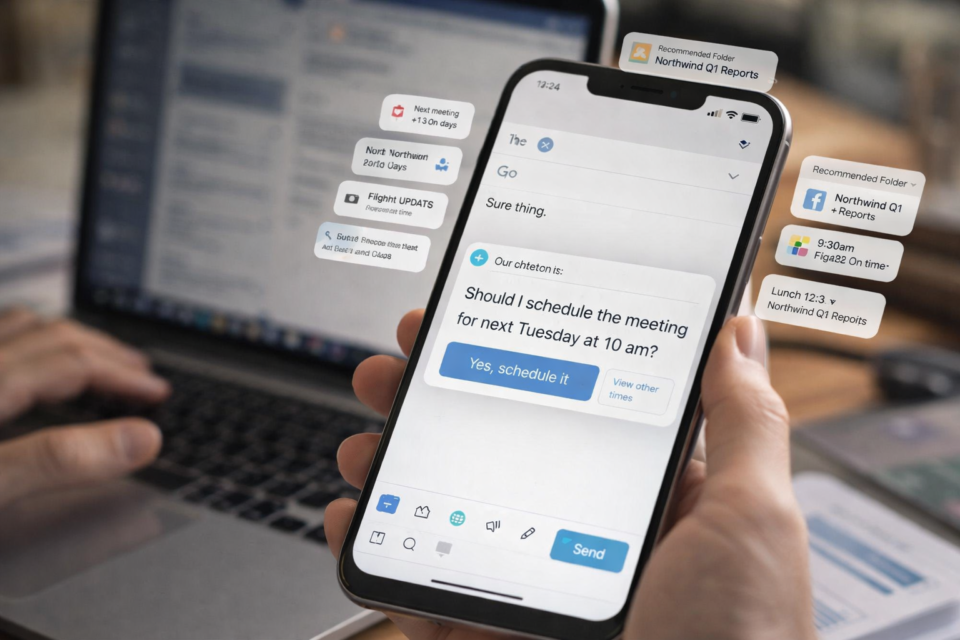
User interfaces are undergoing a quiet transformation. Instead of waiting for users to click, search, or type, modern systems are beginning to anticipate intent and act in advance. This shift is giving rise to predictive interfaces—where software doesn’t just respond, it proactively assists.
From smart suggestions in apps to automated actions based on behavior, interfaces are becoming context-aware, adaptive, and intelligent.
What Are Predictive Interfaces?
Predictive interfaces use AI, data, and behavioral patterns to anticipate what a user is likely to do next—and surface the right action at the right time.
Instead of navigating through menus, users are guided by:
- Smart recommendations
- Auto-complete and auto-actions
- Context-aware prompts
- Personalized workflows
The interface becomes less about control and more about assistance and anticipation.
Why This Shift Is Happening
Data Availability
Continuous user interaction generates data that can be analyzed for patterns.
Advancements in AI Models
Modern AI can understand context, intent, and behavior with high accuracy.
User Experience Expectations
Users expect faster, frictionless interactions with minimal effort.
Competitive Pressure
Products offering smarter experiences gain higher engagement and retention.
Real-World Examples
- Email platforms suggesting replies and scheduling actions
- E-commerce apps recommending products based on behavior
- Productivity tools predicting next steps in workflows
- Navigation apps suggesting routes before you search
These are early forms of interfaces that think ahead of the user.
Business Impact
Predictive interfaces are redefining product experience:
- Reduced friction in user journeys
- Increased engagement and retention
- Faster task completion
- Higher personalization at scale
Companies that implement predictive UX effectively can create stickier, more intuitive products.
Challenges to Consider
- Risk of incorrect predictions leading to poor user experience
- Privacy concerns around data usage
- Over-personalization reducing user control
- Need for transparency in AI-driven suggestions
Balancing intelligence with user trust is essential.
The Road Ahead
Interfaces are moving toward becoming invisible layers of intelligence. In the future, users may interact less with menus and more with systems that understand intent instantly.
The next generation of software will not wait for instructions—it will predict, suggest, and execute.
BizTech Insight
Predictive interfaces represent a shift from reactive design to proactive systems. The companies that succeed will be those that combine accurate prediction with seamless user experience, without compromising trust.
🔍 Key Highlights
Trend: Rise of AI-driven predictive user interfaces
Focus: Context-aware systems and anticipatory design
Impact: Faster interactions, better UX, higher engagement


