
INTRODUCTION
Identity and access management rarely makes headlines, but it sits at the foundation of enterprise cybersecurity. Determining who should have access to what, when that access should be granted, and how it should be governed is, as this interview’s subject puts it, one of the problems that compromised or excessive access turns into organizational risk.
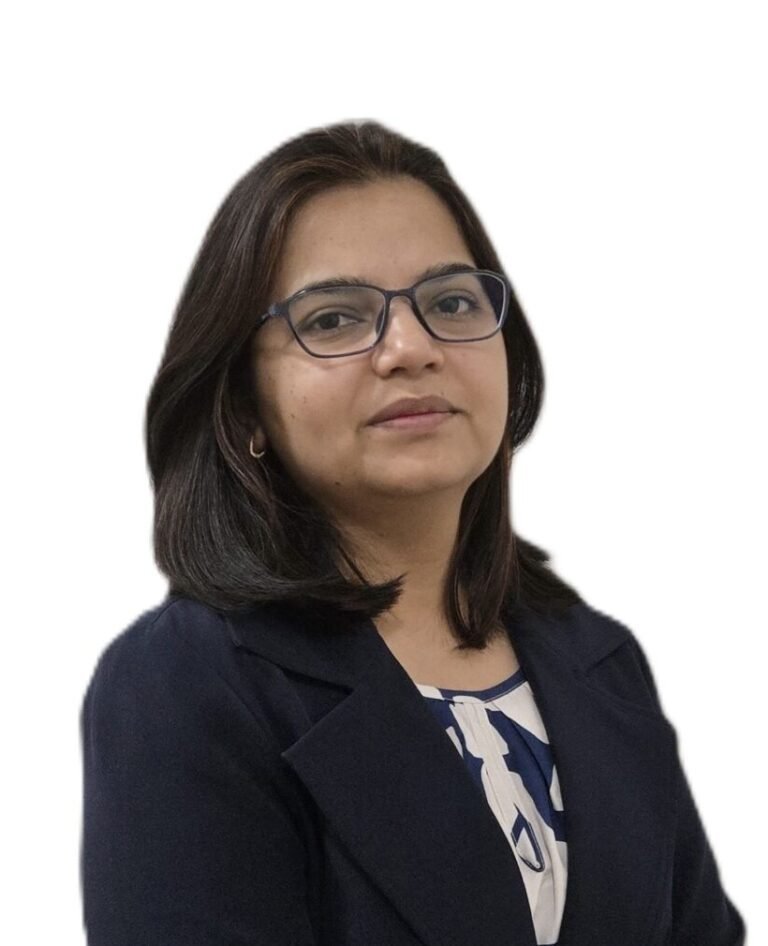
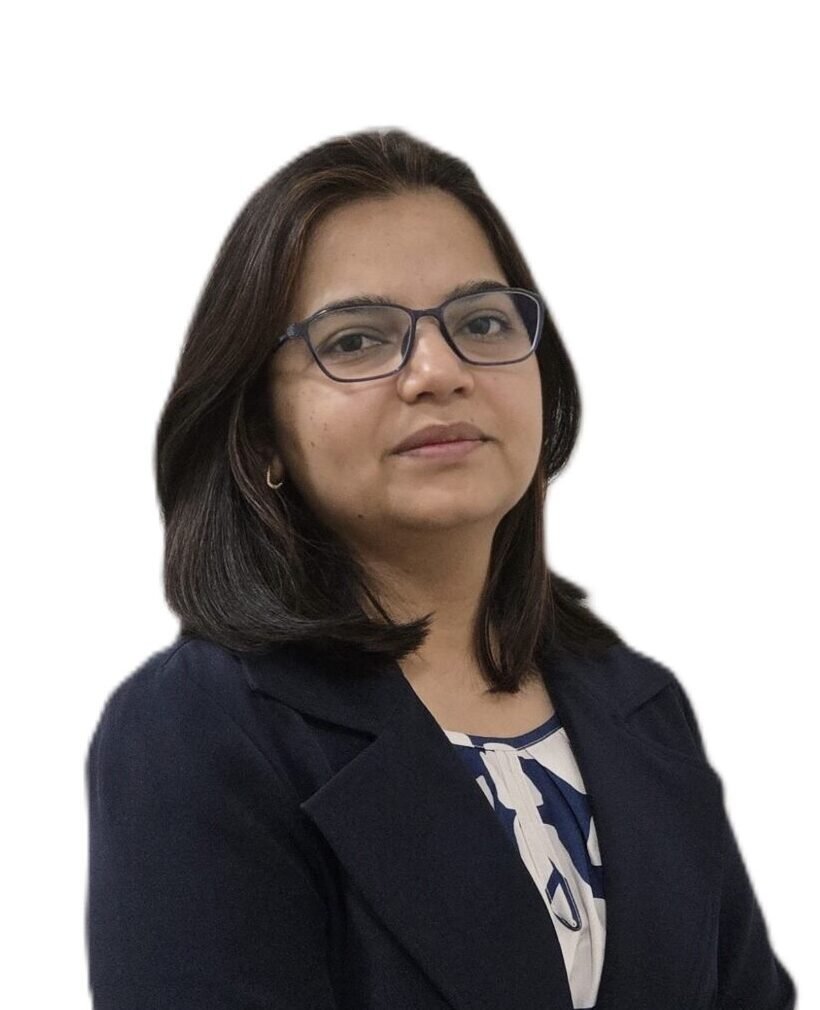
Our guest is an Identity Solutions Architect with more than 10 years of experience in Identity Governance and Administration (IGA), SailPoint IdentityIQ, and privileged access governance. In this conversation with The BizTech Bytes, they explain how enterprise identity programs are built, what makes them fail, and where AI fits into the next generation of access management.
THE CONVERSATION
From Software Engineer to Identity Architect
Q: Please introduce yourself, including your professional background and current role.
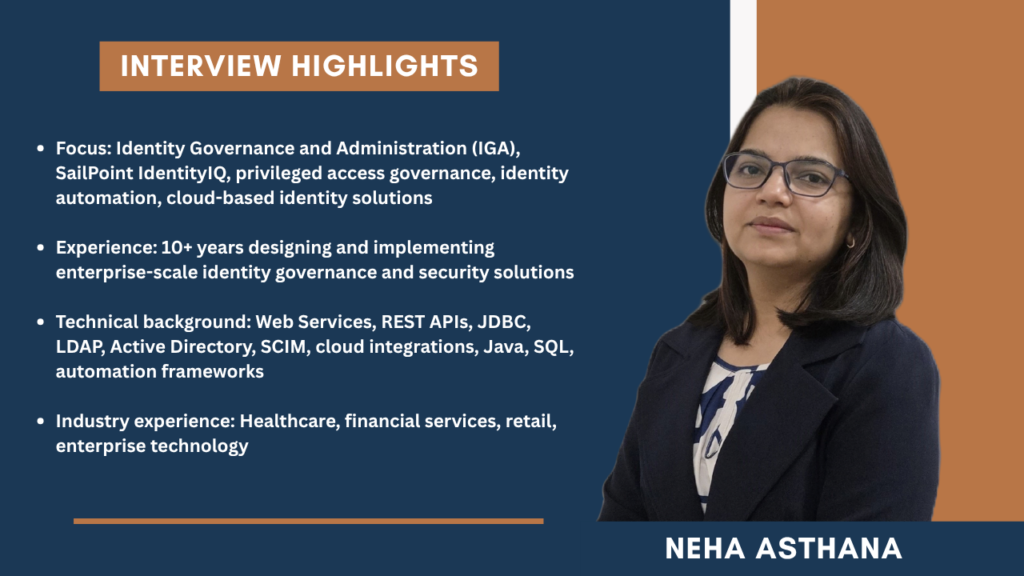
Neha: I am an Identity & Access Management (IAM) Architect with more than 10 years of experience designing and implementing enterprise-scale identity governance and security solutions. My expertise is primarily focused on Identity Governance and Administration (IGA), with extensive experience in SailPoint IdentityIQ, privileged access governance, automation, and cloud-based identity solutions.
Throughout my career, I have worked across technology and enterprise environments, progressing from software engineering and implementation roles into solution architecture and technical leadership. In my current role as an Identity Solutions Architect, I work on complex IAM initiatives that require translating business and security requirements into secure, scalable, and sustainable architectures.
I have led end-to-end IAM implementations, application onboarding programs, identity modernization initiatives, privileged access integrations, and automation frameworks. I also enjoy mentoring engineering teams, conducting architecture reviews, and helping organizations improve identity security while making access management more efficient and manageable.
Q: What inspired your career path, and how has your journey evolved?
Neha:My career was shaped by my interest in technology and the continuous evolution of cybersecurity. As organizations became increasingly dependent on digital systems, I became particularly interested in the challenge of determining who should have access to what information, when that access should be granted, and how it should be governed securely.
The increasing sophistication of cyber threats further reinforced my interest in identity security. I recognized that identity is one of the foundational components of cybersecurity because compromised or excessive access can create significant organizational risk.
I began my career in software engineering, where I developed a strong foundation in programming, application development, and problem solving. I then transitioned into identity and access management, progressing through implementation, engineering, and solution architecture roles. Over time, my focus expanded from implementing individual solutions to designing enterprise-wide identity strategies and architectures.
This journey has taught me to combine technical depth with business understanding, security awareness, and architectural thinking.
“Identity is one of the foundational components of cybersecurity, because compromised or excessive access can create significant organizational risk.”
A Career Built on Governance
Q: What are your key areas of expertise and industry focus?
Neha:My primary area of expertise is Identity Governance and Administration (IGA), particularly the design and implementation of enterprise identity governance solutions. I have extensive experience with SailPoint IdentityIQ and have worked on application onboarding, identity lifecycle management, access certifications, entitlement governance, role and access modeling, segregation-of-duties controls, and automated provisioning.
My expertise also extends into privileged access governance, including integrations with privileged access management platforms, as well as identity automation and cloud-based security solutions. I have worked with technologies including Web Services, REST APIs, JDBC, LDAP, Active Directory, SCIM, cloud integrations, Java, SQL, and automation frameworks.
From an industry perspective, my experience spans healthcare, financial services, retail, and enterprise technology environments. I am particularly interested in how organizations can combine identity governance, automation, analytics, and emerging AI capabilities to create more intelligent and proactive approaches to access management.
My broader focus is on making identity security scalable, measurable, and adaptable to evolving enterprise environments.
A Privileged Access Project Worth the Difficulty
Q: Please share a significant achievement or project you are particularly proud of.
Neha:One project I am particularly proud of was leading the architecture and end-to-end implementation of a Privileged Access Management (PAM) solution integrated with SailPoint IdentityIQ and BeyondTrust Password Safe. The initiative involved onboarding new privileged accounts, migrating existing privileged accounts from a legacy PAM environment, and establishing a more streamlined governance process for privileged access.
The project presented several technical challenges, including API limitations that prevented straightforward bulk account and user loading. I designed a batch-processing approach with scheduled job executions to address these constraints. I also designed the integration between IdentityIQ, Active Directory, and Password Safe, accounting for synchronization delays by incorporating appropriate workflow controls and sequencing.
What made this project particularly meaningful to me was the combination of identity governance, privileged access security, automation, and enterprise architecture. I was responsible for translating complex requirements into a scalable solution while coordinating implementation activities and addressing technical challenges along the way.
The experience reinforced my belief that effective identity security requires not only strong technology, but thoughtful architecture and well-designed governance processes.
“Effective identity security requires not only strong technology, but thoughtful architecture and well-designed governance processes.”
Lessons From Complex Enterprise Environments
Q: What challenges have you faced in your career, and what lessons did you learn?
Neha:One of the biggest challenges in my career has been working with complex enterprise environments where applications, technologies, processes, and business requirements are rarely standardized. Identity programs often involve legacy systems, inconsistent data models, integration limitations, and multiple stakeholders with different priorities.
These experiences taught me that successful architecture is not simply about selecting the right technology. It requires understanding the business problem, identifying constraints early, communicating clearly with stakeholders, and designing solutions that can evolve over time.
I have also learned the importance of adaptability. Technologies and security threats continue to change, so solutions that work today may need to be redesigned tomorrow. This has encouraged me to continuously learn new technologies, explore automation, and understand emerging areas such as AI-driven identity governance.
Another important lesson has been the value of collaboration. Complex enterprise initiatives cannot succeed through individual technical expertise alone. Strong communication, mentoring, knowledge sharing, and teamwork are essential to turning an architectural vision into a successful implementation.
Where Identity Management Is Headed
Q: Which emerging technologies or trends will shape the future of your industry?
Neha:I believe the future of identity and access management will be strongly influenced by artificial intelligence, automation, identity security posture management, cloud adoption, and increasingly dynamic approaches to access control.
AI can help organizations analyze large volumes of identity and access data, identify unusual behavior, detect excessive or inappropriate access, prioritize risks, and support more intelligent access decisions. However, I believe AI should complement governance rather than replace it. Policies, security controls, human oversight, and accountability will remain essential.
Automation will also play an increasingly important role in identity lifecycle management, application onboarding, access provisioning, remediation, and compliance processes. At the same time, organizations will need stronger approaches to continuously assessing their identity security posture across hybrid and multi-cloud environments.
I am particularly interested in the convergence of IGA, privileged access governance, analytics, and AI. The future of identity management will move beyond simply answering “who has access?” toward continuously evaluating whether access remains appropriate, secure, and aligned with organizational risk.
“AI should complement governance rather than replace it. Policies, security controls, human oversight, and accountability will remain essential.”
What Success Requires
Q: What qualities are most important for success in today’s professional landscape?
Neha:I believe adaptability, continuous learning, problem-solving, communication, and integrity are among the most important qualities for professional success today.
Technology is evolving rapidly, and professionals need to be willing to continuously update their knowledge rather than rely solely on what they learned earlier in their careers. At the same time, technical knowledge alone is not enough. The ability to understand business requirements, communicate complex ideas clearly, and collaborate with people from different backgrounds is equally important.
I also believe curiosity is essential. Asking why a problem exists, challenging assumptions, and exploring better approaches often lead to meaningful innovation.
Another important quality is ownership. Professionals should take responsibility not only for completing assigned tasks but also for understanding the broader impact of their work. In areas such as cybersecurity and identity management, decisions can directly affect organizational risk, so attention to detail and ethical responsibility are critical.
Finally, successful professionals should be willing to mentor and support others because knowledge becomes more valuable when it is shared.
What Keeps the Work Interesting
Q: What has influenced your growth and motivates you to continue innovating?
Neha:My growth has been influenced by a combination of challenging projects, evolving technology, collaboration with experienced professionals, and the need to solve real-world enterprise problems. Working on complex IAM environments has continuously pushed me beyond implementation into architecture, strategy, and innovation.
I am particularly motivated when I encounter a process that is repetitive, inefficient, difficult to scale, or creates unnecessary security risk. Those situations encourage me to ask whether technology, automation, or better architecture can provide a more effective solution.
The rapidly changing cybersecurity landscape is another major source of motivation. Organizations face increasingly complex identity environments, and traditional approaches to access management need to evolve accordingly. This has encouraged me to explore areas such as AI-driven identity governance, identity security posture management, automation, and intelligent access decision-making.
I also find motivation in knowledge sharing. Writing technical articles, researching emerging technologies, mentoring colleagues, and discussing architecture with other professionals allow me to continuously learn while contributing to the broader technology community.
Advice for the Next Generation
Q: What advice would you give to students, researchers, or aspiring entrepreneurs?
Neha:My advice is to build strong fundamentals first and then continuously expand your knowledge. Technology changes quickly, but strong problem-solving skills, analytical thinking, communication, and engineering principles remain valuable throughout a career.
I would also encourage students and aspiring professionals not to focus exclusively on learning tools. Understanding the problem that a technology is intended to solve is often more important than simply knowing how to use the technology. Try to work on real problems, build projects, experiment, and learn from failures.
For researchers, I would recommend connecting research with practical challenges. Research becomes particularly meaningful when it addresses problems that organizations and people genuinely face.
For entrepreneurs, persistence and adaptability are critical. Not every idea will work initially, and feedback may require you to change your approach. Treat those experiences as opportunities to learn rather than setbacks.
Finally, develop a habit of sharing knowledge. Writing, presenting, mentoring, and participating in professional communities can strengthen your understanding while helping others learn from your experiences.
“Understanding the problem that a technology is intended to solve is often more important than simply knowing how to use the technology.”
Q: What is your professional vision and the impact you hope to create?
Neha:My professional vision is to contribute to the evolution of identity and access management from a largely process-driven discipline into a more intelligent, automated, risk-aware, and continuously governed security capability.
I want to continue developing solutions that help organizations manage identities and access securely while reducing unnecessary operational complexity. I am particularly interested in the intersection of identity governance, artificial intelligence, automation, privileged access governance, and identity security posture management.
Beyond individual implementations, I hope to contribute knowledge and frameworks that can be applied more broadly across organizations and industries. This includes publishing research, sharing practical insights, mentoring professionals, and participating in technical and research communities.
Ultimately, I want my work to help organizations establish stronger security foundations while making identity management more efficient and scalable. I also hope to encourage the next generation of technology professionals to approach cybersecurity not only as a defensive discipline, but as an area where thoughtful architecture, innovation, automation, and responsible use of emerging technologies can create meaningful long-term impact.
Key Takeaways
- Identity is a foundational component of cybersecurity; compromised or excessive access creates organizational risk.
- Effective identity security depends on architecture and governance, not just technology selection.
- AI should complement identity governance, not replace it; human oversight and accountability remain essential.
- The future of IAM shifts from “who has access?” to continuously evaluating whether access remains appropriate and secure.
- Success in enterprise architecture requires adaptability, communication and collaboration alongside technical depth.
- Advice for newcomers: understand the problem a technology solves before learning the tool, and build real projects.