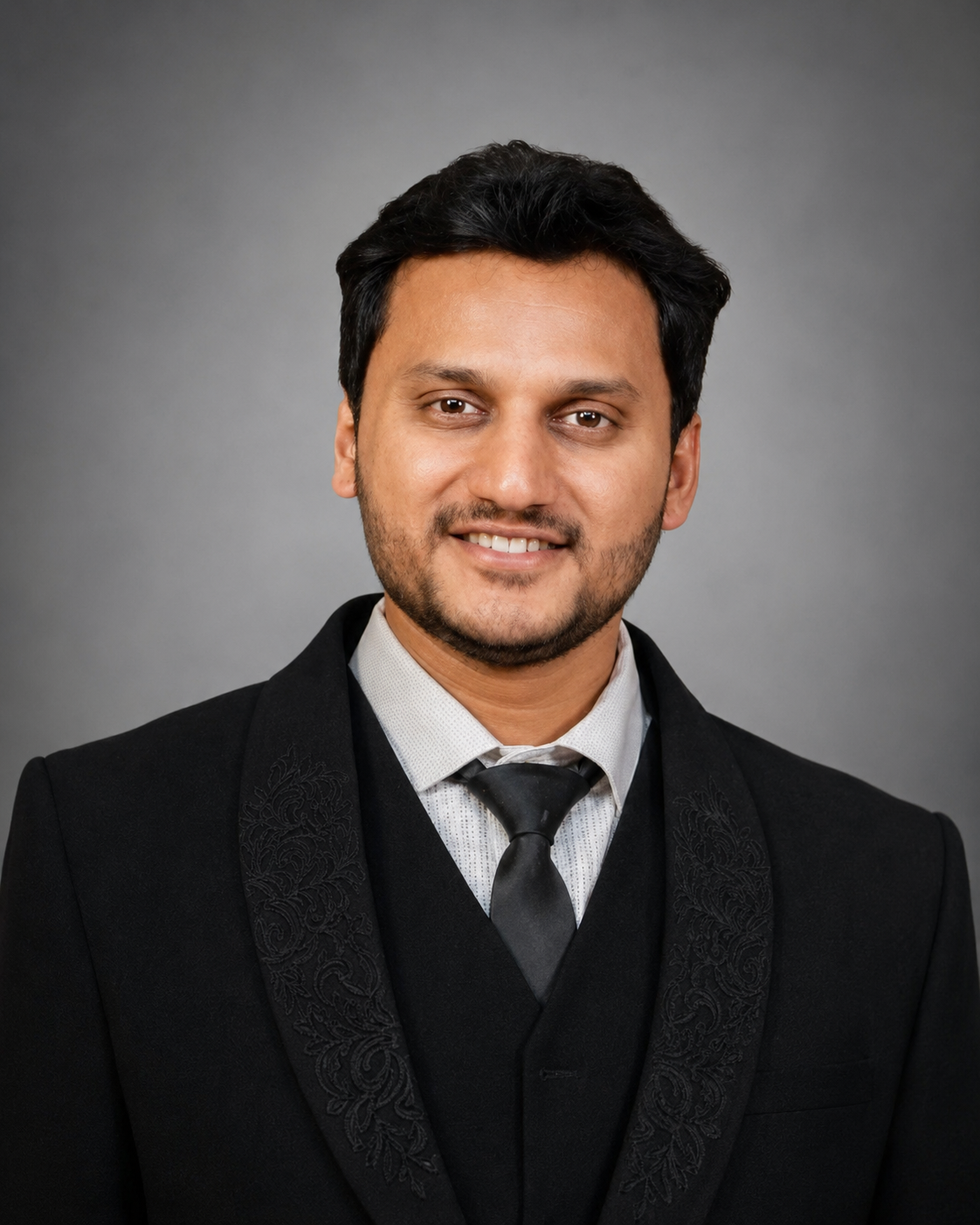


As organizations increasingly adopt autonomous AI systems, the conversation is shifting from what AI can do to how reliably it can do it. At the intersection of distributed systems, enterprise software, and agentic AI is Veera Ravindra Divi, a Technology Lead, independent researcher, and IEEE-published author whose work focuses on building AI systems that are not only intelligent but dependable, auditable, and production-ready. With more than eleven years of experience spanning low-latency trading systems, cloud infrastructure, and large-scale B2B commerce at a FAANG company, Veera combines deep engineering expertise with practical research to advance the future of trustworthy autonomous systems.
In this exclusive interview with The BizTech Bytes, he shares insights into his professional journey, research, emerging AI trends, and his vision for building autonomous systems that organizations can confidently trust.
Q1. Please introduce yourself, including your professional background and current role.
Veera Ravindra Divi:
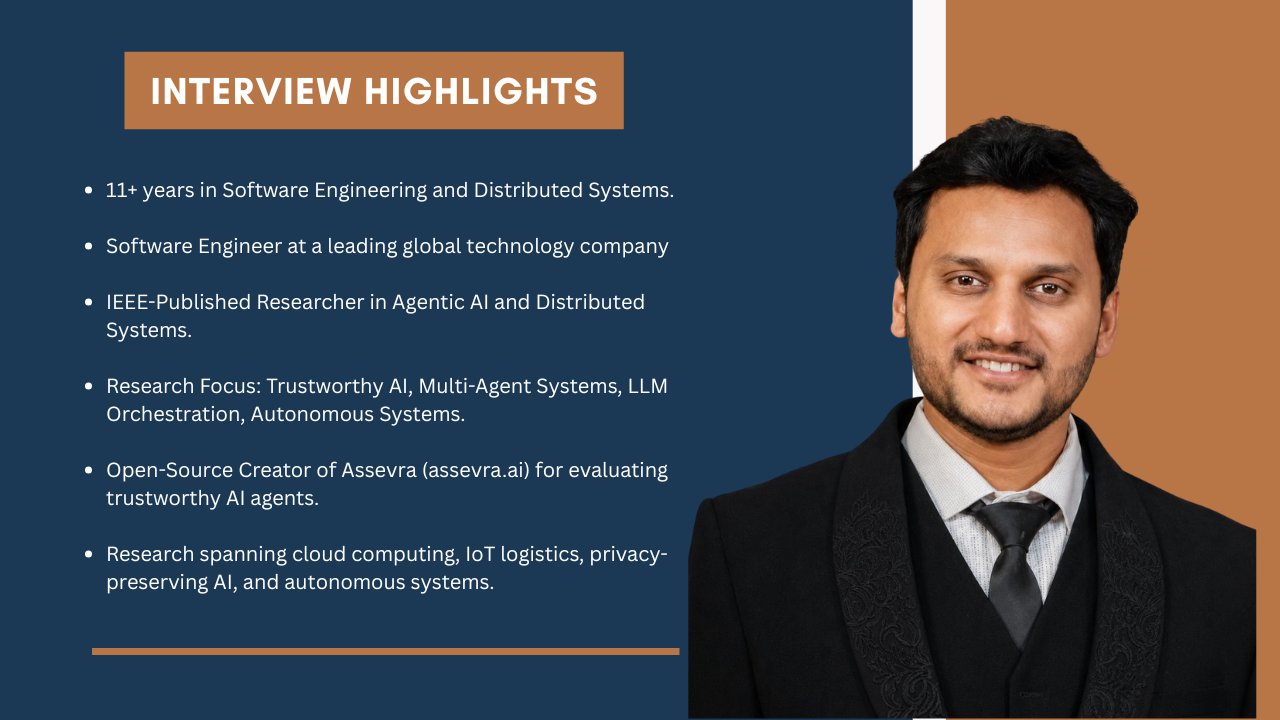
I’m Veera Ravindra Divi -a software engineer and independent researcher who has spent the last 11+ years building the kind of systems that other systems, and a lot of people, quietly rely on. My path runs from low-latency trading systems on financial desks, through cloud infrastructure, to large-scale B2B commerce and enterprise-ordering platforms at a big tech company, where I work today.
My current focus is agentic AI: develop copilots, autonomous release automation, and the distributed systems that keep everything dependable. Alongside the engineering, I’m an IEEE–published author, with research at the intersection of agentic AI, distributed systems, and trustworthy automation. So depending on the hour, I’m either shipping production software or writing about how to make it more reliable-and, happily, often both.
Q2. What inspired your career path, and how has your journey evolved?
Veera Ravindra Divi:
What drew me in wasn’t the glamour of technology -it was the deep satisfaction of bringing order and clarity to complex, real-world problems. Businesses rarely hand you a tidy specification; they bring you rich, layered challenges, with evolving requirements, systems that need to work well together, and real stakes when something matters.
I found I loved the craft of turning all of that into something clean and dependable -something people can count on without having to think about it. That instinct has stayed with me as the technology has evolved: from trading systems where speed and precision were everything, to cloud platforms, to large-scale commerce, and now to AI agents. The tools keep advancing, but the heart of the work-creating structure and reliability people can trust -has been the same rewarding pursuit from day one.
Q3. What are your key areas of expertise and industry focus?
Veera Ravindra Divi:
Three threads, tightly braided. First, distributed and event-driven systems -the foundation of anything that has to be fast, correct, and always available. Second, agentic and autonomous AI: LLM orchestration, multi-agent architectures, and AI-assisted software development. Third, mission-critical B2B commerce -enterprise ordering, integration, and the essential, behind-the-scenes reliability that keeps commerce moving smoothly.
What connects them is a question I keep returning to: how can we let software-and now AI -act autonomously while keeping it safe, auditable, and genuinely trustworthy? Most of my engineering, and all of my research, happily orbits that question.
Q4. Please share a significant achievement or project you are particularly proud of.
Veera Ravindra Divi:
The work I’m proudest of is my research on making autonomous systems trustworthy enough to run in production. It grew from a hopeful insight: many of the difficulties people attribute to AI “getting it wrong” are really well-understood reliability questions our field already knows how to answer.
That idea runs through all of my IEEE work. In CostAgent, it’s a self-improving, autonomous LLM-based orchestrator for cost-optimal cloud data processing. In my edge-to-cloud research –Priority-Aware Edge-to-Cloud IoT Event Streaming for Reliable Proof-of-Delivery .it’s about keeping mission-critical logistics dependable even under real-world network and operational conditions. And in PrivTwin, it’s privacy-preserving generative digital twins, so we can build strong models while fully respecting sensitive data.
Watching these ideas grow from early sketches into peer-reviewed papers, accepted conference presentations, and a filed patent -and into conversations with other researchers — is the achievement that means the most to me.

Quick Facts
Current Focus: Agentic AI, Distributed Systems, Autonomous Release Automation
Specialization: LLM Orchestration • Multi-Agent Systems • Cloud Infrastructure • Enterprise Commerce • Trustworthy AI
Research Interests: AI Reliability • Distributed Systems • Privacy-Preserving AI • Software Engineering
Q5. Which emerging technologies or trends will shape the future of your industry?
Veera Ravindra Divi:
The trend I’m most excited about is the shift from making AI simply smarter to making it genuinely dependable. We’ve spent a few remarkable years expanding what these systems can do; the next few will be about making them safe and reliable enough to trust with real responsibility -through solid runtime reliability, governance you can audit, and thoughtful boundaries where human judgment adds the most value.
I’m also excited about privacy-preserving and synthetic data, which will let us build capable models while fully honoring people’s data. And agentic developer tools are set to make building software faster and more accessible than ever. But the theme that ties it all together is trust. The teams that thrive won’t necessarily have the flashiest AI-they’ll have the most dependable.
“Creating structure and reliability people can trust has been the constant throughout my career.”
Q6. What advice would you give to students, researchers, or aspiring entrepreneurs?
Veera Ravindra Divi:
Start before you feel fully ready, and go narrow. The most common hesitation I see is waiting — for permission, for the perfect idea, for more credentials -while wonderful time slips by.
You learn far more from one small thing you actually finish than from ten grand plans you only outline. If you’re a researcher, choose a question you can honestly answer with the resources you have, and answer it fully and well. If you’re building, put something real in front of a real person early; their response will teach you more than another month of planning. And write things down -the act of explaining your work clearly is where much of the real understanding happens.
“The teams that thrive won’t necessarily have the flashiest AI-they’ll have the most dependable.”
Q7. What is your professional vision and the impact you hope to create?
Veera Ravindra Divi:
My vision is a future where we can confidently entrust meaningful work to autonomous systems — where an AI agent acting on your behalf is as trustworthy as a well-run financial system, because it’s built on the same proven principles: safety, reconciliation, and human oversight where it matters most.
I’d love to help connect the reliability engineering we already understand with the remarkable AI capabilities we’re still learning to trust. If my work -in production and on paper -helps move agentic AI even a little closer to something people can simply depend on, I’ll consider that a career well spent. To me, “dependable” is the highest compliment there is.
Key Takeaways
- Trustworthy AI will define the next phase of enterprise AI adoption.
- Reliability engineering is becoming a core discipline for autonomous systems.
- Agentic AI requires governance, observability, and human oversight—not simply larger models.
- Distributed systems principles remain essential for building production-grade AI.
- Curiosity, consistency, and clear thinking matter more than chasing every new technology.