

As technology continues to evolve, enterprise systems are expected to be more than just scalable-they must be intelligent, resilient, and capable of adapting to change.
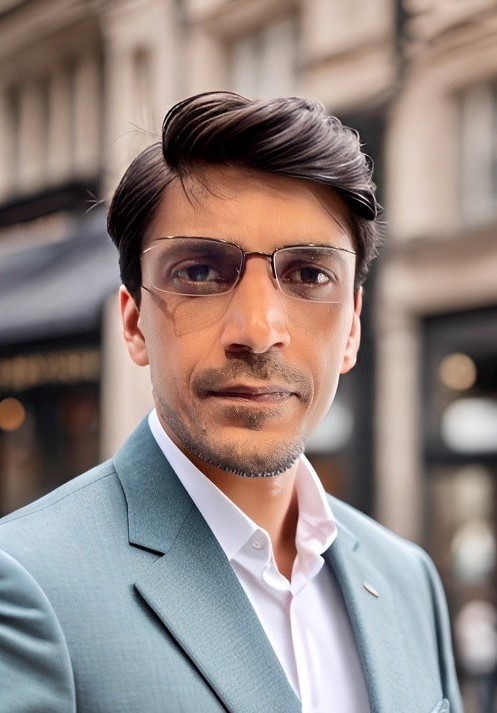
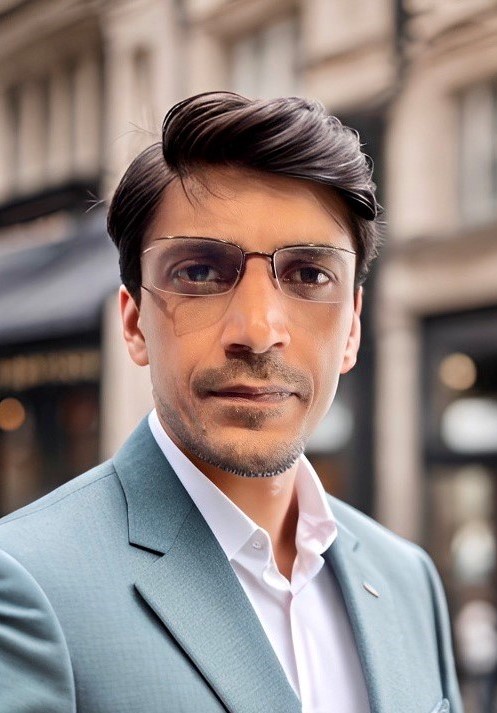
With over two decades of experience in enterprise technology and research, Ketankumar Savajiyani is helping redefine how distributed systems operate. His research in cloud-native architecture, observability, AI-driven operations, and zero-trust security bridges the gap between academic innovation and real-world enterprise challenges.
In this interview, he discusses the evolution of distributed systems, the rise of autonomous AI, lessons from regulated industries, and his vision for building systems that are self-aware, self-healing, and ready for the future.
Fast Facts
Name: Ketankumar Savajiyani
Experience: 21+ Years
Specialization: Distributed Systems • Cloud-Native Architecture • AI-Driven Operations
Research Areas: Observability • Zero-Trust Security • Autonomous AI • Enterprise Resilience
Professional Recognition:
- IEEE Senior Member
- Distinguished Fellow, Soft Computing Research Society (SCRS)
Industries: Financial Services, Banking, and Telecommunications
Q1. Please introduce yourself, including your professional background and current role.
My name is Ketankumar Savajiyani and I work as an Independent Researcher in distributed systems, cloud-native architecture, and AI-driven operations. I hold a Master of Computer Applications degree and have spent more than 21 years working across financial services and telecommunications environments, which has given me a practical grounding for the research problems I pursue. I am an IEEE Senior Member and a Distinguished Fellow of the Soft Computing Research Society. My current research focuses on how distributed systems can become self-aware, self-healing, and resource-efficient without requiring constant human intervention.
Q2. What inspired your career path, and how has your journey evolved?
Early in my career I worked on large enterprise systems where small architectural decisions had consequences that took years to fully understand. That experience made me genuinely curious about what makes a distributed system resilient versus fragile. Over time, that curiosity shifted from applied engineering into structured research. I started formalizing patterns I had observed into frameworks with testable properties and measurable outcomes. The transition from practitioner to researcher was gradual but felt like a natural extension of the same questions I had been asking throughout my career.
Q3. What are your key areas of expertise and industry focus?
My technical focus spans distributed systems and microservices resilience, observability engineering, zero-trust security and federated identity, and AI-orchestrated autonomous operations. These are connected threads rather than separate interests: a well-designed distributed system needs all of them working together. From an industry perspective, banking and telecommunications have been my primary domains, where reliability is not optional and the cost of an unplanned outage is measured in more than just engineering hours.
Q4. Please share a significant achievement or project you are particularly proud of.
One contribution I find particularly meaningful is the development of original research frameworks that address real gaps in enterprise systems engineering. My work on observability frameworks for enterprise data pipelines, zero-trust security architectures for federated microfrontend systems, and autonomous AI-driven remediation has been accepted at IEEE and Springer peer-reviewed venues. What I value most is that these frameworks address problems practitioners actually face, not problems that are convenient to study in isolation.
Q5. What challenges have you faced in your career, and what lessons did you learn?
The most persistent challenge I have encountered is the gap between what works in theory and what the research literature describes as ideal, versus what engineering teams actually face when building and operating systems at scale. Distributed architectures that look clean in design can accumulate operational complexity quickly when requirements evolve and teams grow. The lesson I took from that is the importance of designing for observability and operability from the start, not as an afterthought. Systems that cannot be interrogated under pressure cannot be operated with confidence.
Key Takeaways
- Resilient systems are designed—not discovered.
- Observability and operability should be built into every enterprise platform from day one.
- AI’s future lies in autonomous orchestration backed by governance and trust.
- Practical engineering experience is just as important as academic research.
- Strong fundamentals and curiosity remain the foundation of long-term success.
Q6. Which emerging technologies or trends will shape the future of your industry?
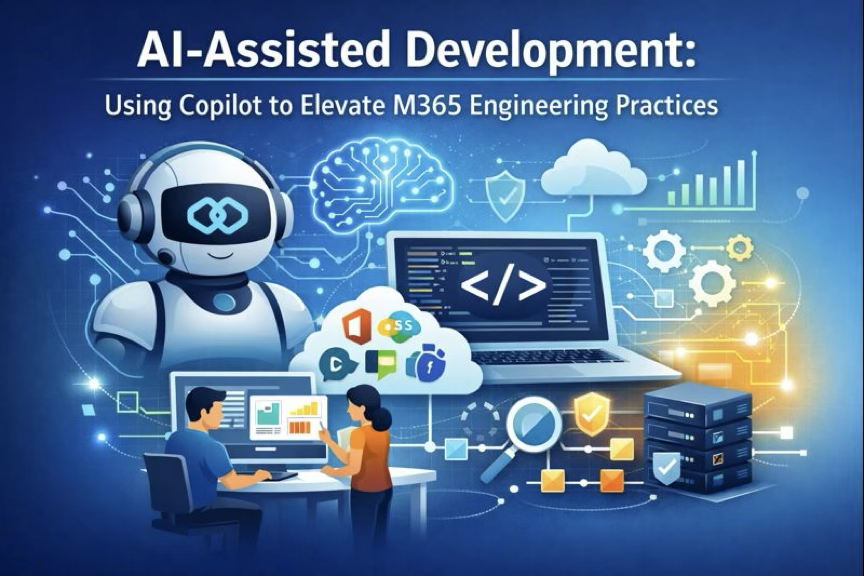
Multi-agent AI systems are the development I watch most closely. We are moving from AI as a tool that responds to queries toward AI as an orchestration layer that can reason about system state and take autonomous corrective action. The engineering challenge is making that orchestration trustworthy and auditable, which is not a solved problem. The teams that get this right will have a meaningful advantage in how they operate complex systems at scale.
Q7. What qualities are most important for success in today’s professional landscape?
Intellectual honesty ranks highest for me. The ability to look at a result that does not confirm your hypothesis and treat it as useful information rather than a failure is genuinely rare and genuinely valuable. Beyond that, the capacity to work across domains matters more than it used to. The interesting problems in distributed systems today require understanding of networking, security, machine learning, and sometimes regulatory compliance simultaneously.
“Intellectual honesty is one of the most valuable skills in technology. Real progress begins when we’re willing to question our own assumptions.”
Q8. What has influenced your growth and motivates you to continue innovating?
The problems themselves motivate me more than external recognition does. When a research question does not have a satisfying answer, that gap is difficult to ignore. I have also been influenced by working in regulated industries where system failures have consequences for real people. That keeps the research grounded. It is easy to optimize for elegance in isolation; it is harder and more worthwhile to optimize for correctness and reliability in environments where those things are not negotiable.
Q9. What advice would you give to students, researchers, or aspiring entrepreneurs?
Start with a problem that genuinely bothers you, not one that looks publishable or fundable. The work is hard enough that external motivation alone will not sustain it. For researchers specifically: build things. The gap between understanding a system academically and understanding it through the experience of building and breaking it is large. Some of the most useful insights come from engineers who built something, watched it fail in an unexpected way, and then asked why.
Q10. What is your professional vision and the impact you hope to create?
My longer-term vision is a body of work that helps engineering teams build systems that are fundamentally more self-aware and self-sustaining. Not systems that eliminate the need for human judgment, but systems that handle the routine and predictable well enough that human attention can be reserved for the genuinely novel. If the frameworks coming out of my research prove useful to practitioners building in banking, telecommunications, and adjacent domains, and make those systems more reliable and more efficient, that is a meaningful outcome.
“The goal isn’t to replace engineers with AI-it’s to give them more time to solve the problems that truly require human insight.