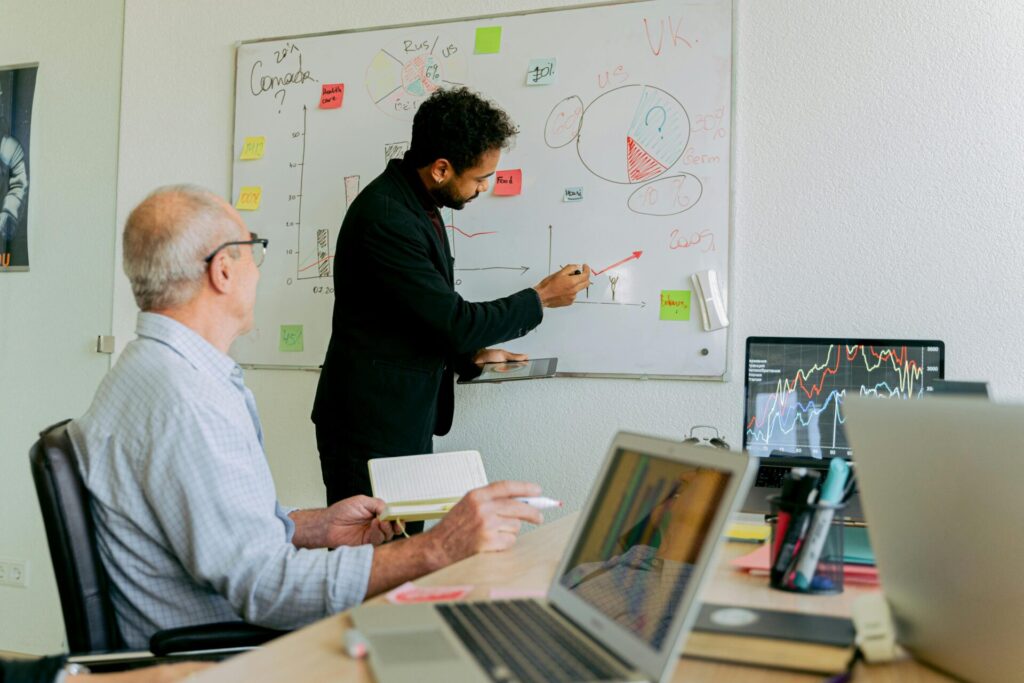


For decades, the Retail Business Analyst (BA) has been the essential bridge between raw data and commercial action. If a Category Lead needed to understand why a specific private-label electronics brand was seeing a spike in return rates, they didn’t just open a tool. They submitted a ticket.
That ticket initiated a standard manual process: the BA would translate the business problem into SQL queries across multiple data warehouses, export the results into CSVs, and spend hours in Excel performing VLOOKUPs to join sales data with customer feedback and logistics logs. By the time the final summary reached the stakeholder, the “real-time” insight was often several days old.
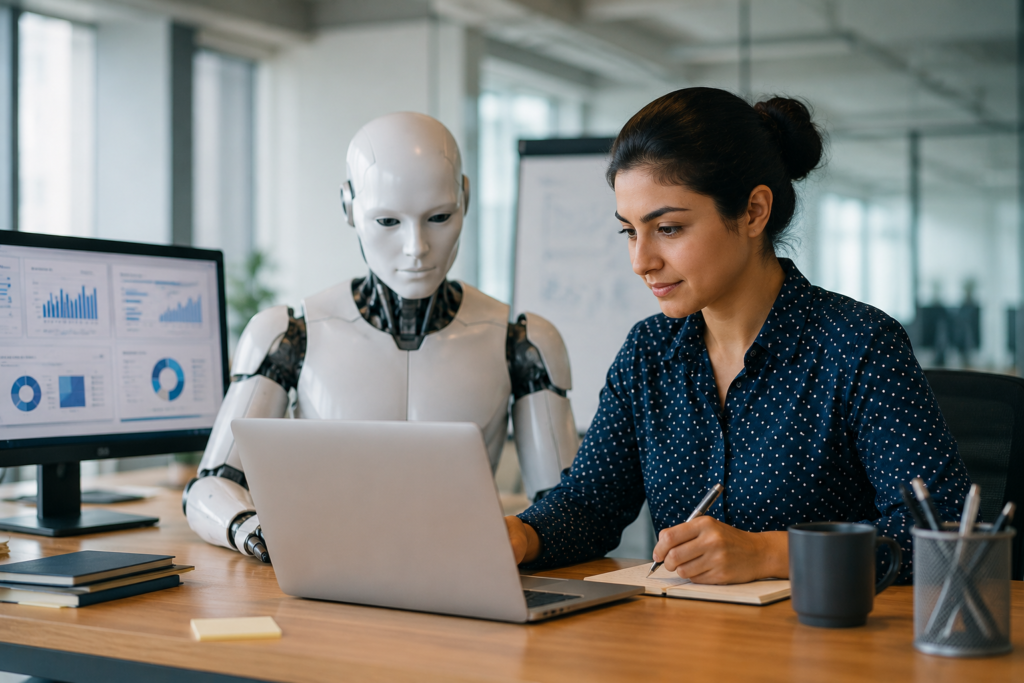
On February 5, 2026, Anthropic introduced a paradigm shift. With the release of Claude Opus 4.6 and its non-technical interface, Claude Cowork, the traditional data-retrieval queue is being replaced by instant, agentic discovery.
1. The Opus 4.6 Leap: From Chatbots to E-commerce Agents
Opus 4.6 represents a fundamental architectural shift toward agentic autonomy. In a high-velocity environment like Amazon, where SKU counts and log entries are massive, this model provides the “horsepower” needed for deep-scale reasoning.
Key technical breakthroughs in the 4.6 release include:
- 1 Million Token Context Window: Opus 4.6 can ingest entire product catalogs, thousands of customer reviews, and weeks of supply chain telemetry in a single session.
- Adaptive Thinking: A new “Effort” parameter allows the model to scale its reasoning. For a simple inventory count, it is instantaneous; for a complex root-cause analysis of “Lost Buy Box” logic, it “thinks” more deeply to ensure statistical accuracy.
- Collaborative Agent Teams: Opus 4.6 can spin up specialized sub-agents. One agent cleans the unstructured customer feedback, another runs the regression analysis against pricing changes, and a third audits the logic for outliers.
“Opus 4.6 moves AI from answering questions to orchestrating analysis.”
2. The Mechanics of Multi-Agent Sub-Teams
One of the most sophisticated features of Claude Opus 4.6 is its ability to operate not just as a single brain, but as a Project Lead for a swarm of specialized sub-agents. In a retail context, data is often too fragmented for a single pass.
When a user asks a complex question in Claude Cowork, Opus 4.6 initiates an “Agentic Workflow”:
- The Orchestrator: This is the primary Opus 4.6 model. It breaks the user’s request into a “Dependency Graph”—deciding what needs to happen first.
- The Data Engineer Agent: A sub-agent specialized in “Computer Use” that navigates various directories, identifies the correct Excel schemas or SQL tables, and performs the initial join.
- The Statistical Analyst Agent: A sub-agent focused purely on mathematical rigor. It looks for anomalies and ensures the data isn’t being misinterpreted by “hallucinated” trends.
- The Red-Team Auditor: Crucially, Opus 4.6 can spin up a “Critic” agent. Its sole job is to try and find flaws in the Data Engineer’s work, ensuring high-stakes retail decisions are based on verified logic.
“Retail analytics is shifting from manual reporting to AI-led investigative workflows.”
3. Claude Cowork: The Non-Technical Interface for Retail Leaders
If Claude Code is for the SDEs, Claude Cowork is for the Product Managers and Vendor Managers. Cowork is a desktop interface that integrates directly with a user’s local workspace and enterprise data connectors.
The Workflow Evolution in Retail
| Feature | The Traditional Data Workflow (Pre-2026) | The Claude Cowork Workflow (Post-Opus 4.6) |
| Problem Definition | Stakeholder writes requirements for a BA. | Stakeholder asks a goal-oriented question. |
| Data Aggregation | BA manually joins tables from Redshift/S3. | Claude navigates data sources via agentic “computer use.” |
| Analysis | Manual pivot tables and trend lines in Excel. | Claude performs sandboxed analysis in seconds. |
| Verification | Human spot-checking for data integrity. | Multi-agent “Self-Correction” and logic audits. |
| Actionable Output | Static PDF or PowerPoint summary. | Interactive datasets and ready-to-send action plans. |
4. Speed-to-Insight: Empowering the Category Stakeholder
The most profound change for retail professionals is the removal of cognitive friction. In the traditional model, stakeholders often hesitate to ask “follow-up” questions because of the lead time required for a new report.
Claude Cowork eliminates this queue. Because Cowork operates as a digital teammate with access to relevant data directories, a Category Manager can ask: “I see the 10% dip in conversion for Home Decor, but show me that same data filtered only for Prime members in the Southwest—did the shipping delay impact them specifically?” Claude doesn’t need a new ticket; it updates the analysis in minutes.

“Insight no longer waits in a queue — it evolves in conversation.”
5. Reimagining A/B Testing at Scale
In e-commerce, A/B testing is the lifeblood of optimization. Claude Cowork and Opus 4.6 compress this cycle in three distinct ways:
- Automated Hypothesis Generation: Instead of a PM guessing what to test, they can ask Claude to analyze the “Drop-off” points in the current customer journey. By looking at heatmaps and session logs, the AI suggests specific UI variants to test.
- Real-Time Significance Monitoring: Traditionally, a BA would wait 14 days for a test to reach statistical significance. Claude Cowork can monitor the live stream. If a variant is causing a spike in customer service contacts or a sharp drop in checkout completion, Claude can flag it to the PM immediately.
- Post-Test Synthesis: Claude Cowork can ingest the winning data alongside unstructured customer reviews to explain why a version won, moving from raw numbers to actionable psychological insights.
6. The New Role of the Retail Analyst
The role of the Business Analyst isn’t going away; it is evolving into a Strategic Orchestrator. The manual labor of “Query-Download-Excel” is being automated, allowing analysts to focus on higher-value tasks:
- Data Governance: Ensuring the datasets Claude Cowork accesses are high-fidelity and “clean.”
- Logic Guardrails: Defining the business logic (e.g., how “Net Pure Profit” is calculated) so the AI remains aligned with company standards.
- Predictive Strategy: Moving from reporting on what happened to simulating what will happen if a promotion is launched.
7. Enterprise Security: The Local Sandbox
Security is paramount in e-commerce. Anthropic addressed this in the 4.6 release using a Multi-layered Security Sandbox. When a Retail Manager gives Cowork access to a folder, the AI doesn’t “upload” the data to a public cloud. Instead, it creates a temporary, isolated Virtual Machine on the user’s local infrastructure.
“Claude Cowork interacts with your files the way a human would—browsing, reading, and calculating—but within a locked digital environment that is purged the moment the task is completed.”
“Claude interacts with enterprise data like a human — but within a controlled, ephemeral digital boundary.”
8. Conclusion: The Agile Future of Retail
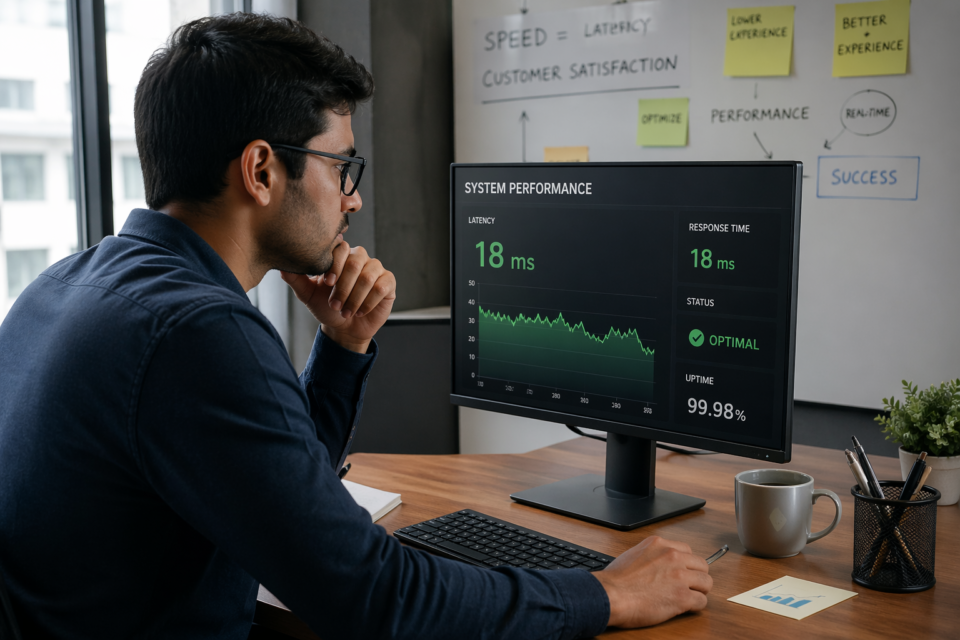
The launch of Claude Opus 4.6 and Claude Cowork signals a move toward “Frictionless Intelligence.” For any retail giant where every millisecond of latency or every percentage point of conversion matters, the ability to bypass the “Ticket-Query-Excel” loop is a massive competitive multiplier.
By turning the Business Analyst into a Strategic Architect and the Stakeholder into a Data-Empowered Explorer, we are entering an era where the data doesn’t just sit in a warehouse—it lives and breathes in the conversation of the business.
Author note “The future of retail intelligence lies not in accessing more data, but in enabling more people to interact with it meaningfully. As agentic AI removes the friction between question and insight, decision-making becomes faster, more inclusive, and strategically empowered — redefining how modern retail organizations compete and innovate.”