Generative AI Is Changing How New Medicines Are Discovered
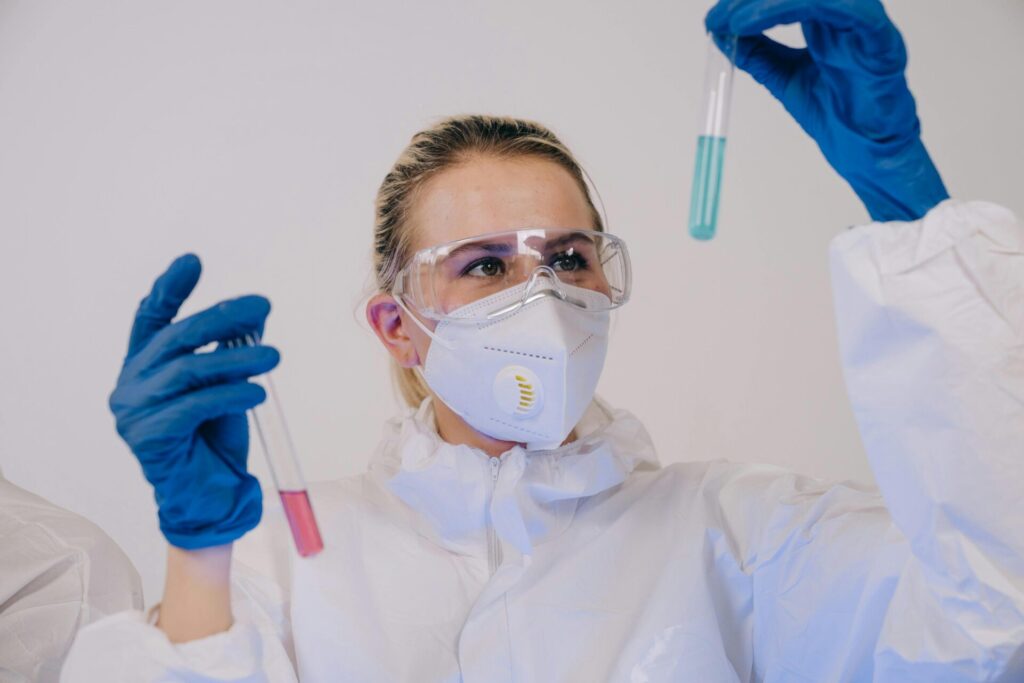
Generative AI is beginning to change the way biomedical research is done, especially in the early stages of drug discovery. Instead of relying only on expensive laboratory experiments, researchers are now using AI models to study and design molecules digitally—saving both time and cost.
The Transformation of Drug Discovery to Nepal and the World by Diffusion Models.
Generative AI is beginning to change the way biomedical research is done, especially in the early stages of drug discovery. Instead of relying only on expensive laboratory experiments, researchers are now using AI models to study and design molecules digitally—saving both time and cost.
Traditionally, techniques like X-ray crystallography and cryo-electron microscopy have been essential but costly and resource-intensive. Generative AI offers an alternative by simulating molecular interactions on computers, allowing researchers to test multiple possibilities quickly and efficiently.
According to Raghab Singh, a senior AI researcher, newer generative models can create realistic three-dimensional molecular structures by learning how molecules naturally behave. This makes it easier for scientists to explore drug candidates before moving to physical testing.
This shift is particularly important for developing countries, where access to advanced laboratory infrastructure is limited. With the right data and computing resources, universities and research teams can now take part in global drug discovery efforts without massive investments.
As per research work of Mr. Singh, Currently, generative methods have explicit enforcement of physical symmetries, so that molecules are always valid, and the position they are placed in space does not matter. It is the basis in physics that the serious generative science stands against the superficial patterning. Diffusion models generated through respect to conservation laws and geometric invariances enable scientists to make interpretations and trust the output and make additions and build upon it. The prognosis is a digital-first discovery process whereby compounds may be screened, refined, and evaluated computational but no lab-work done.
While laboratory validation is still essential, experts agree that AI is significantly lowering entry barriers and accelerating early research—an advantage that could play a crucial role in responding to future health challenges.
According to Mr. Singh, the first step towards realizing this potential is education in the case of Nepal. By incorporating the concept of generative AI and molecular modeling into the curricula of universities, as well as interdisciplinary training, the future scientists will be trained to operate at the interface of computer science, biology and chemistry. More importantly, there is need to use these tools responsibly. Mr. Singh also give focus on the addition of physical limits to the AI systems which would enhances transparency, reliability, and trust, which are crucial attributes of biomedical science, where the inaccurate judgments have actual human implications.
“Generative AI allows researchers to explore molecular structures with far greater flexibility and speed,”“author ADDED“
Researchers such as Raghab Singh stress that generative AI does not disregard the necessity for laboratory research but instead shifts the initial phases of experimentation to computational environments. It makes it easier to enter the process and increases participation by moving the initial phases of the discovery to the digital domain. In the case of Nepal, it is a chance to jump further and become a direct participant of the biomedical knowledge economy worldwide. It is a vision of the future to the world, where not only will the process of drug discovery be quicker, but the distribution, distribution, and responsiveness of the drug discovery process will also become more human-needs oriented.
Generative AI is lowering barriers to drug discovery by moving early experimentation into computational environments, enabling faster and more inclusive biomedical research. With responsible use, interdisciplinary education, and strong scientific safeguards, this shift offers emerging economies a rare opportunity to participate directly in the global knowledge economy while accelerating innovation for future health challenges.
T Health Clinical Informatics Consultant at Elevance Health (USA), with expertise in healthcare data analytics, clinical system architecture, and large-scale data pipelines. He actively conducts research in generative AI, diffusion-based models, reinforcement learning, robotic manipulation, and biomedical AI applications, and serves as a peer reviewer for international AI, robotics, and machine learning journals. Raghab holds a Master’s in Computer Science (University of South Dakota, USA) and a Bachelor’s in Electronics & Communication Engineering (MNNIT, India), bridging advanced AI research with real-world clinical data solutions.