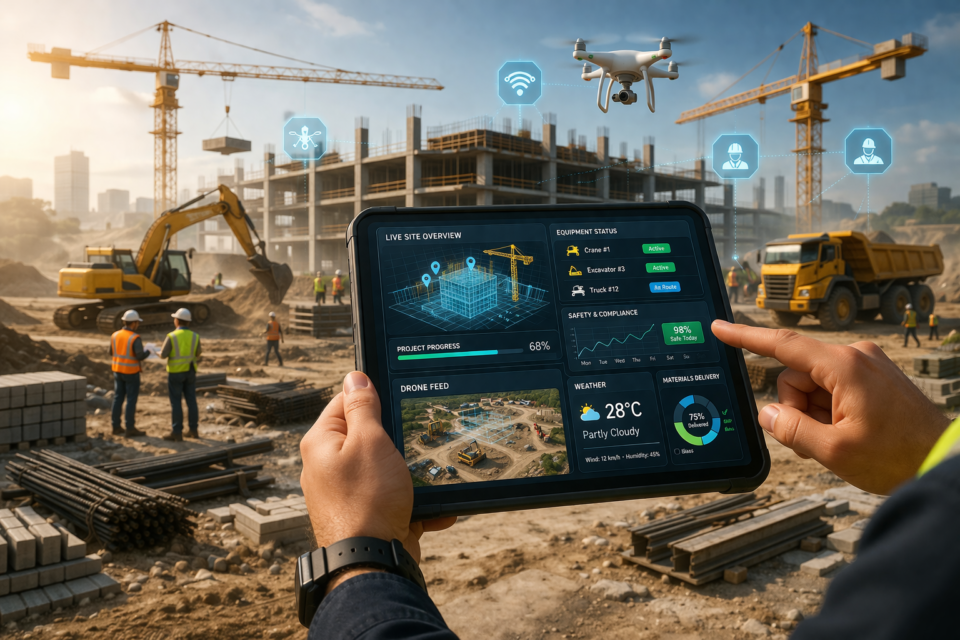
The construction and heavy industry sectors—long considered slow to adopt digital innovation—are now undergoing a significant transformation. With the integration of advanced technologies such as IoT, automation, data analytics, and AI, these industries are rapidly shifting toward tech-first operational models.
This transition is not just about modernization—it is about efficiency, safety, scalability, and real-time decision-making in large-scale infrastructure projects.
What Does “Tech-First Construction” Mean?
Tech-first construction refers to the adoption of digital tools and intelligent systems across the entire project lifecycle—from planning and design to execution and maintenance.
Key technologies driving this shift include:
- Internet of Things (IoT) sensors for real-time monitoring
- AI and analytics for predictive insights
- Drones and imaging for site surveillance
- Digital twins for simulation and planning
- Automation in heavy machinery and workflows
These technologies are transforming traditional construction into a data-driven, connected ecosystem.
Why the Shift Is Happening Now
Several factors are accelerating the adoption of technology in construction and heavy industry:
Rising Project Complexity
Modern infrastructure projects require higher precision, coordination, and efficiency.
Cost and Time Pressures
Delays and budget overruns are pushing companies toward smarter, automated solutions.
Safety and Compliance Needs
Digital monitoring systems help reduce risks and improve worker safety.
Demand for Real-Time Visibility
Stakeholders now expect live updates and data-driven insights throughout project execution.
Key Use Cases Across the Industry
Smart Construction Sites
IoT-enabled equipment and sensors track progress, material usage, and environmental conditions in real time.
Digital Twin Technology
Virtual models of construction projects allow simulation, testing, and optimization before execution.
Autonomous Machinery
Self-operating equipment improves precision, reduces labor dependency, and increases productivity.
Drone-Based Monitoring
Drones capture site data, enabling faster inspections and progress tracking.
Business Impact
The move toward tech-first operations is delivering measurable benefits:
- Reduced project delays and cost overruns
- Improved safety and compliance
- Enhanced productivity and resource optimization
- Better decision-making through real-time data
Companies adopting these technologies are gaining a competitive advantage by delivering projects faster, safer, and more efficiently.
Challenges to Address
Despite the progress, challenges remain:
- High initial investment in technology
- Integration with legacy systems
- Skill gaps in digital tools and data analytics
- Resistance to change in traditional workflows
Addressing these barriers will be critical for long-term adoption.
The Road Ahead
Construction and heavy industry are entering a new era where technology is no longer optional but foundational. As digital tools become more accessible and cost-effective, even mid-sized firms are expected to adopt tech-first approaches.
In the future, construction sites will evolve into fully connected, intelligent environments, where decisions are driven by data rather than intuition.
BizTech Insight
The transformation of construction and heavy industry reflects a broader shift in the global economy—where even the most traditional sectors are becoming technology-driven. The companies that embrace this change early will define the next generation of infrastructure development.
🔍 Key Highlights
Trend: Digitization of construction and heavy industry
Focus: IoT, AI, digital twins, and automation
Impact: Efficiency, safety, and real-time decision-making