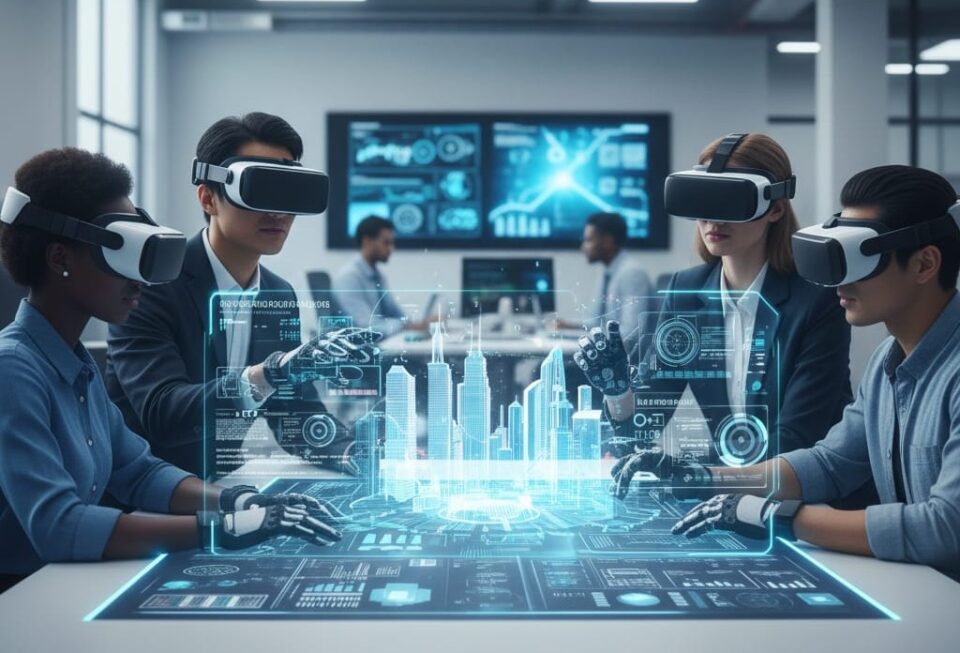
Virtual reality (VR) and augmented reality (AR) technologies are steadily moving beyond consumer entertainment into practical enterprise collaboration tools, reshaping how teams work, train, and solve problems together.
As hybrid and remote work models become permanent fixtures, organizations are searching for more immersive ways to collaborate across distances. Enterprise VR/AR platforms are addressing this need by enabling shared virtual spaces where teams can interact with digital content, prototypes, and data as if they were physically co-located.
In industries such as engineering, manufacturing, healthcare, and architecture, AR is being used to overlay digital instructions, diagnostics, or design elements directly onto real-world environments. This allows technicians, clinicians, and designers to work more efficiently while reducing errors and training time.
VR collaboration platforms are also gaining traction for design reviews, simulations, and skills training. Employees can practice complex procedures, explore virtual models, or participate in interactive workshops without the constraints of physical location. These environments support real-time communication, spatial awareness, and hands-on engagement that traditional video conferencing cannot replicate.
Advancements in hardware—lighter headsets, improved optics, and better ergonomics—combined with more intuitive software platforms are lowering adoption barriers. At the same time, integration with enterprise systems such as CAD tools, digital twins, and collaboration suites is making VR/AR a natural extension of existing workflows.
While adoption remains selective, momentum is building as organizations measure tangible benefits in productivity, knowledge transfer, and operational efficiency. Enterprise VR/AR is increasingly viewed not as a novelty, but as a strategic collaboration layer for complex, distributed work.
BizTech Foundation Insight:
Immersive collaboration is redefining how work gets done. As VR and AR mature, enterprises that adopt these tools thoughtfully will unlock new levels of engagement, learning, and operational clarity.
🔍 Key Highlights
- Technology: Enterprise VR and AR platforms
- Focus: Remote collaboration, training, immersive workflows
- Impact: Improved productivity, reduced errors, enhanced engagement


