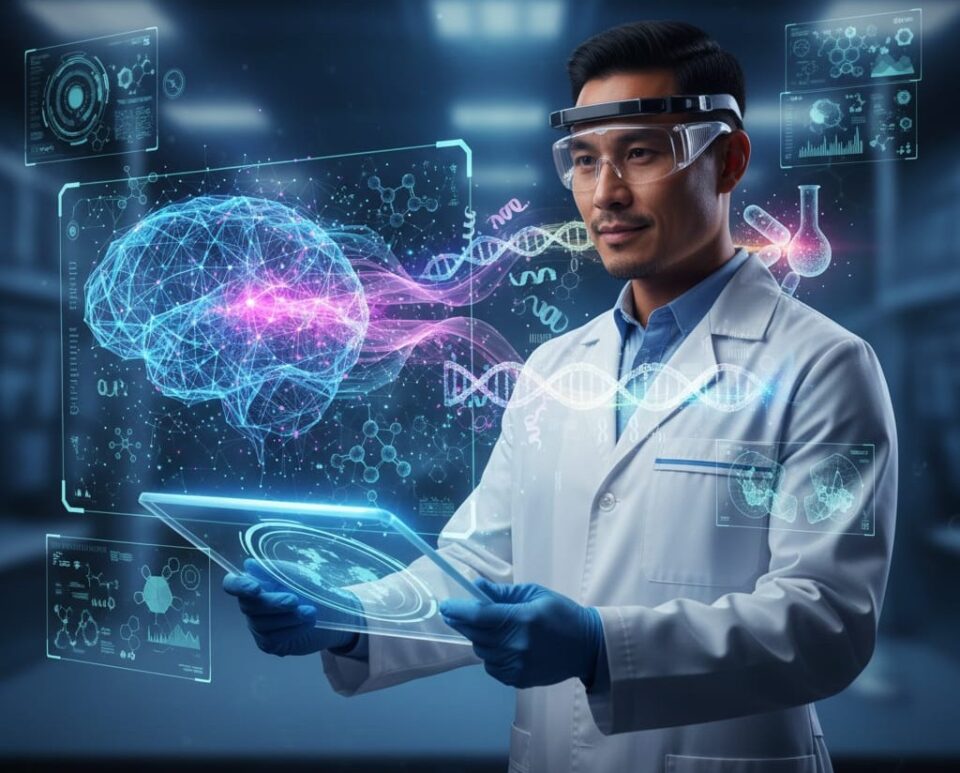
Artificial intelligence is rapidly reshaping the pharmaceutical and life sciences landscape, as AI-driven platforms move from experimental pilots to core components of drug discovery and genomic research.
Traditionally, discovering and developing a new drug is a slow, expensive, and uncertain process—often taking more than a decade and billions of dollars before reaching market. AI is helping compress this timeline by analyzing massive biological datasets, identifying promising compounds, and predicting molecular behavior with unprecedented speed and accuracy.
In drug discovery, machine learning models are being used to screen millions of chemical structures, simulate how molecules interact with biological targets, and flag potential toxicity risks early in the development cycle. This enables researchers to focus laboratory resources on the most viable candidates, significantly reducing trial-and-error experimentation.
Genomic research is seeing similar acceleration. AI systems can now process vast volumes of genomic sequencing data to identify disease markers, genetic mutations, and population-level patterns that were previously difficult to detect. These insights are advancing personalized medicine, where treatments are tailored to an individual’s genetic profile rather than applied uniformly.
Pharmaceutical companies, biotech startups, and research institutions are increasingly partnering with AI vendors to integrate these capabilities into their R&D pipelines. Cloud-based platforms and high-performance computing environments are making advanced AI tools accessible even to smaller research teams.
Importantly, AI is not replacing scientists—it is augmenting them. Human expertise remains essential for hypothesis generation, validation, and ethical oversight. AI’s role is to enhance discovery productivity, reduce development risk, and unlock insights hidden within complex biological systems.
As regulatory frameworks evolve and AI models become more explainable and reliable, the impact of AI on healthcare innovation is expected to deepen—bringing new therapies to patients faster and more efficiently.
BizTech Foundation Insight:
AI is transforming life sciences from a data-intensive discipline into an insight-driven one. Organizations that successfully integrate AI into research workflows will gain a decisive advantage in speed, cost, and innovation.
🔍 Key Highlights
- Technology: AI in drug discovery and genomics
- Focus: Faster R&D, precision medicine, data-driven insights
- Impact: Reduced development timelines, improved treatment outcomes


