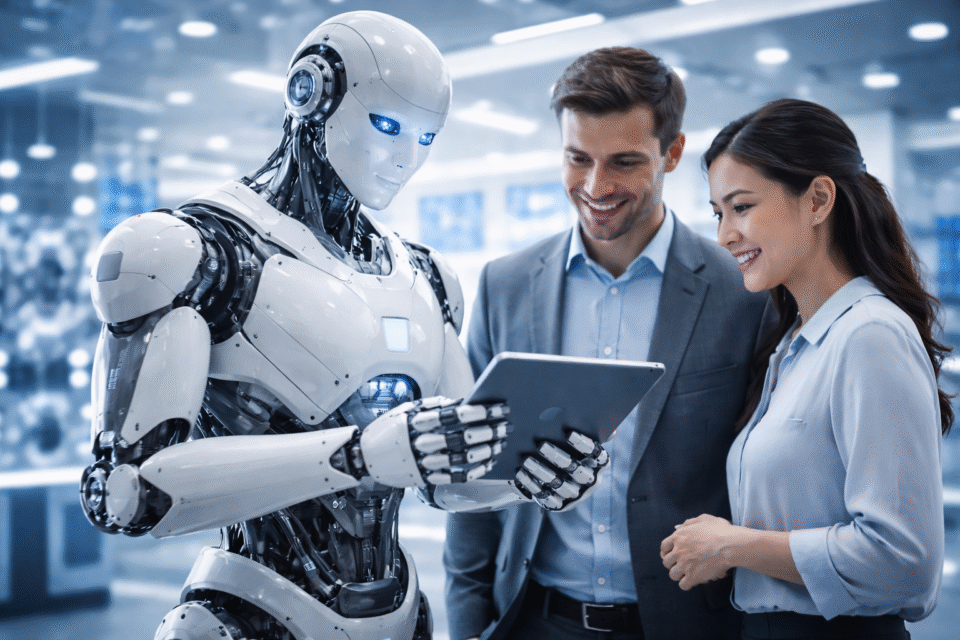
CES 2026 has made one trend unmistakably clear: artificial intelligence is no longer confined to software interfaces and cloud platforms—it is rapidly extending into the physical world through humanoid robotics and embodied intelligence.
Across the show floor, humanoid robots and advanced autonomous systems are being positioned not as experimental concepts, but as practical tools designed for real-world environments. This marks a notable shift from previous years, where robotics often emphasized novelty demonstrations rather than deployable capability.
What distinguishes the robotics showcased at CES 2026 is the convergence of AI reasoning, perception, and physical interaction. These systems are designed to see, interpret, and respond to their surroundings in real time—leveraging advances in computer vision, sensor fusion, and adaptive motion control. Rather than executing fixed routines, modern humanoid robots are increasingly capable of learning from context and adjusting behavior dynamically.
A key theme emerging from CES 2026 is human–machine collaboration. Developers are focusing on robots that augment human work rather than replace it, addressing challenges such as labor shortages, repetitive tasks, and hazardous working conditions. Potential applications span logistics support, facility operations, service environments, and assisted care—areas where flexibility and safe interaction are essential.
From an enterprise perspective, the appeal of humanoid robotics lies in adaptability. Unlike traditional automation systems built for single-purpose workflows, humanoid robots can be retrained through software updates and redeployed across multiple operational scenarios. This software-driven approach aligns closely with modern enterprise technology strategies, where agility and scalability are critical.
CES 2026 also highlights how AI’s evolution is moving beyond digital optimization toward embodied intelligence, where decisions made by algorithms have direct physical outcomes. This transition introduces new considerations around safety standards, operational governance, workforce integration, and ethical deployment—topics that enterprises are increasingly factoring into long-term automation roadmaps.
As physical AI matures, CES 2026 signals that the future of automation will not be defined solely by smarter algorithms, but by intelligent systems capable of acting responsibly in shared human environments.
BizTech Foundation Insight:
CES 2026 underscores a pivotal moment in technology evolution. Humanoid robotics represents the fusion of AI and physical capability, pointing toward a future where intelligent machines collaborate with humans to enhance productivity, safety, and operational resilience.
🔍 Key Highlights
Event: CES 2026
Technology: Humanoid robotics, physical AI
Focus: Real-world deployment, human–machine collaboration
Impact: Workforce augmentation, flexible automation, operational efficiency


