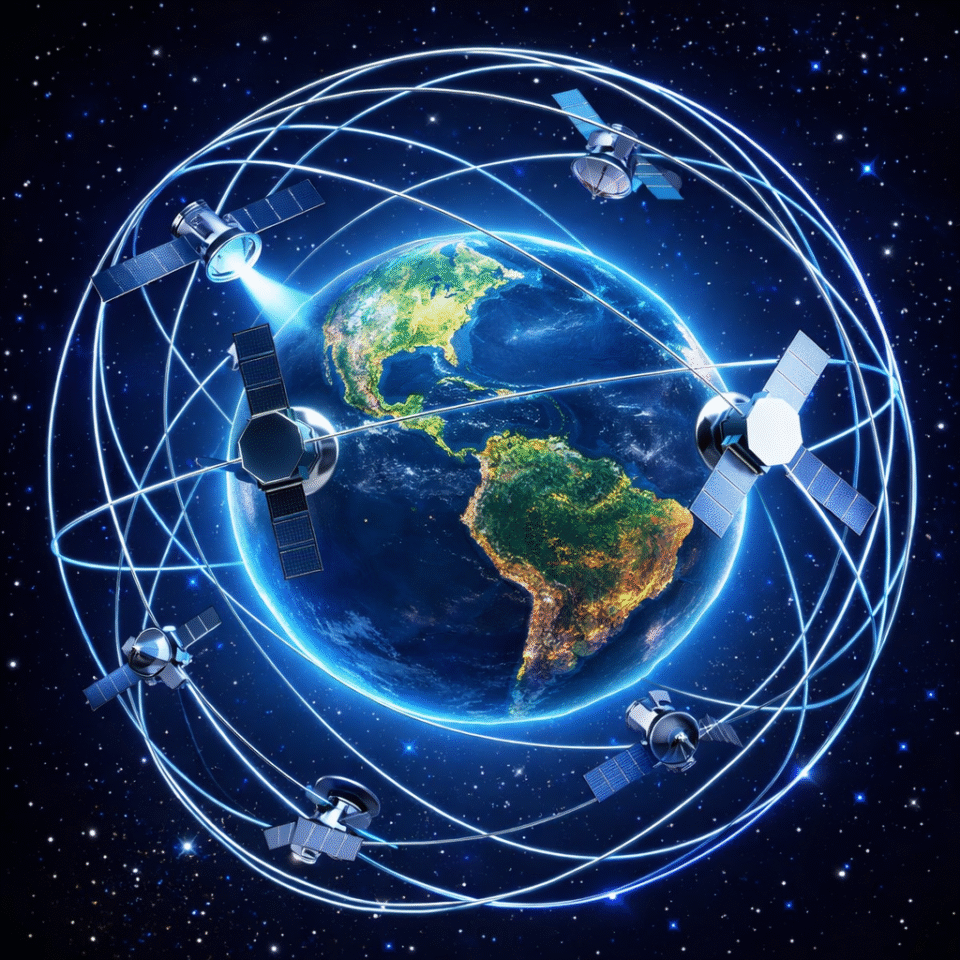
Satellite-to-device (S2D) connectivity is emerging as a breakthrough in global communications, aiming to provide direct mobile connectivity from space to standard consumer devices without reliance on terrestrial network infrastructure.
Unlike traditional satellite communications that require specialized terminals or antennas, S2D technology allows regular smartphones and IoT devices to connect directly with low-Earth orbit (LEO) satellites. This innovation is gaining momentum as telecom operators, satellite providers, and technology companies work together to close global coverage gaps.
The technology holds significant promise for emergency communications, rural and remote connectivity, maritime and aviation operations, and disaster recovery, where ground-based networks are limited or unavailable. By extending coverage beyond towers and fiber networks, satellite-to-device connectivity enhances network resilience and continuity.
Advances in satellite miniaturization, spectrum sharing, antenna design, and signal processing are accelerating deployment timelines. Rather than replacing terrestrial mobile networks, S2D connectivity is positioned as a complementary layer, enhancing coverage and redundancy while supporting next-generation communication use cases.
As global demand for always-on connectivity grows, satellite-to-device technology is also attracting attention from governments and regulators focused on national resilience, emergency preparedness, and digital inclusion.
BizTech Foundation Insight:
Satellite-to-device connectivity represents a new frontier in communications. By blending space and terrestrial networks, it has the potential to redefine how connectivity is delivered—anywhere, anytime.
🔍 Key Highlights
Technology: Satellite-to-device connectivity
Focus: Global coverage, network resilience
Impact: Expanded access, emergency readiness, digital inclusion


