Predictive Interfaces: When Software Knows Before You Act

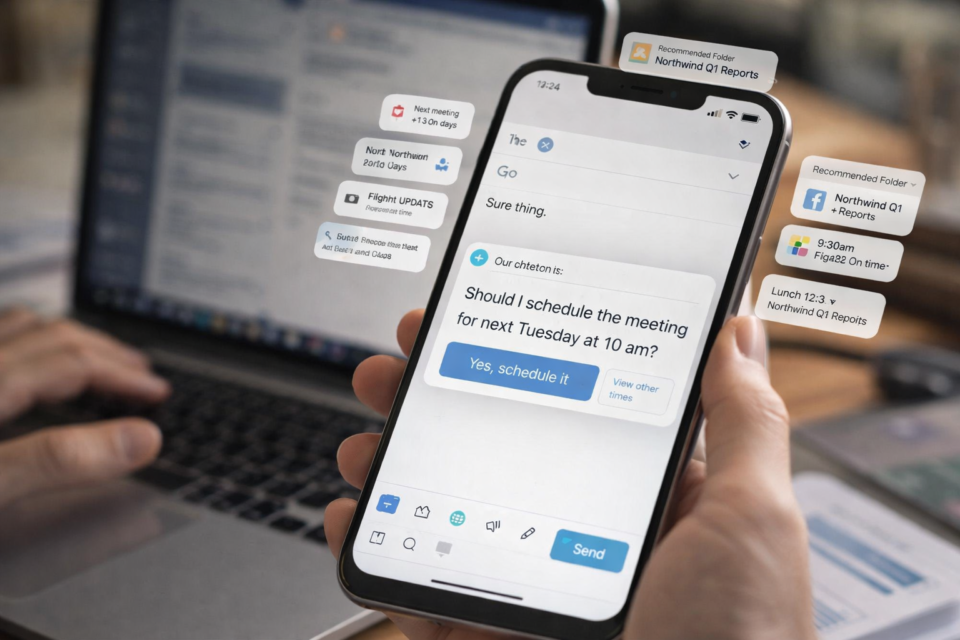
User interfaces are undergoing a quiet transformation. Instead of waiting for users to click, search, or type, modern systems are beginning to anticipate intent and act in advance. This shift is giving rise to predictive interfaces—where software doesn’t just respond, it proactively assists.

User interfaces are undergoing a quiet transformation. Instead of waiting for users to click, search, or type, modern systems are beginning to anticipate intent and act in advance. This shift is giving rise to predictive interfaces—where software doesn’t just respond, it proactively assists.

From smart suggestions in apps to automated actions based on behavior, interfaces are becoming context-aware, adaptive, and intelligent.

What Are Predictive Interfaces?

Predictive interfaces use AI, data, and behavioral patterns to anticipate what a user is likely to do next—and surface the right action at the right time.

Instead of navigating through menus, users are guided by:

  • Smart recommendations
  • Auto-complete and auto-actions
  • Context-aware prompts
  • Personalized workflows

The interface becomes less about control and more about assistance and anticipation.

Why This Shift Is Happening

Data Availability
Continuous user interaction generates data that can be analyzed for patterns.

Advancements in AI Models
Modern AI can understand context, intent, and behavior with high accuracy.

User Experience Expectations
Users expect faster, frictionless interactions with minimal effort.

Competitive Pressure
Products offering smarter experiences gain higher engagement and retention.

Real-World Examples

  • Email platforms suggesting replies and scheduling actions
  • E-commerce apps recommending products based on behavior
  • Productivity tools predicting next steps in workflows
  • Navigation apps suggesting routes before you search

These are early forms of interfaces that think ahead of the user.

Business Impact

Predictive interfaces are redefining product experience:

  • Reduced friction in user journeys
  • Increased engagement and retention
  • Faster task completion
  • Higher personalization at scale

Companies that implement predictive UX effectively can create stickier, more intuitive products.

Challenges to Consider

  • Risk of incorrect predictions leading to poor user experience
  • Privacy concerns around data usage
  • Over-personalization reducing user control
  • Need for transparency in AI-driven suggestions

Balancing intelligence with user trust is essential.

The Road Ahead

Interfaces are moving toward becoming invisible layers of intelligence. In the future, users may interact less with menus and more with systems that understand intent instantly.

The next generation of software will not wait for instructions—it will predict, suggest, and execute.

BizTech Insight

Predictive interfaces represent a shift from reactive design to proactive systems. The companies that succeed will be those that combine accurate prediction with seamless user experience, without compromising trust.

Infomations

Time

Key Highlights

Trend

Rise of AI-driven predictive user interfaces

Focus

Context-aware systems and anticipatory design

Impact

Faster interactions, better UX, higher engagement

Author Profile

Somya Agrawal

Tech Editor in The Biztech Bytes

Somya Agrawal is the Technology Editor at The BizTech Bytes with over 6 years of experience in technology content, digital innovation, and industry research. She specializes in covering emerging technologies, AI trends, enterprise transformation, and business innovation, transforming complex concepts into insightful and engaging content for a global audience. Through her editorial work, Somya contributes to showcasing impactful ideas, industry perspectives, and innovation-driven stories shaping the future of technology.

Related posts

Generative AI Is Changing How New Medicines Are Discovered

Generative AI Is Changing How New Medicines Are Discovered

Generative AI is beginning to change the way biomedical research is done, especially in the early stages…

AI in the Audio World: From Signal Processing to Perceptual Intelligence

AI in the Audio World: From Signal Processing to…

Audio has gone from being primarily a passive signal-processing problem to a smart, flexible system. AI has…

Building Next-Generation Intelligent Intrusion Prevention Systems

Building Next-Generation Intelligent Intrusion Prevention Systems

Table of Contents Introduction The convergence of traditional IDS/IPS technologies with AI-based systems will mark a major…

AI-Assisted Development: Using Copilot to Elevate M365 Engineering Practices

AI-Assisted Development: Using Copilot to Elevate M365 Engineering Practices

Artificial intelligence is rapidly changing how software is written, tested, and maintained—but not always in the ways…

Beyond Speed: How Microsoft Power Platform Is Redefining Enterprise DevOps

Beyond Speed: How Microsoft Power Platform Is Redefining Enterprise…

Abstract Low-Code and No-Code platforms are often perceived as productivity shortcuts for building applications quickly. In modern…

Intelligent Finance Meets Intelligent Infrastructure:Practical Innovations Shaping Modern Financial Services

Intelligent Finance Meets Intelligent Infrastructure:Practical Innovations Shaping Modern Financial…

From Rule-Based Finance to Adaptive Intelligence Traditional financial systems were designed around static rules, periodic reporting, and…

LLMs at the Edge: Decentralized Power and Control

LLMs at the Edge: Decentralized Power and Control

First, large language models (LLMs), such as those in the recent GPT-3, have proved crucial in processing…

Data Sovereignty: Designing AI for Local Control

Data Sovereignty: Designing AI for Local Control

Data in the contemporary world is one of the most valuable assets in the demanding technologies, markets,…

Agentic AI in Healthcare: From Assistance to Autonomy

Agentic AI in Healthcare: From Assistance to Autonomy

Healthcare is one of the most data-rich and complex industries in the world. With electronic health records…

Implementing Privileged Access Management Solutions: Challenges and Best Practices

Implementing Privileged Access Management Solutions: Challenges and Best Practices

Privileged Access Management (PAM) is a critical component in securing privileged accounts, credentials, and secrets in enterprise…

Operational Lessons from Running High-Availability Java Systems

Operational Lessons from Running High-Availability Java Systems

High availability Java systems sit quietly behind many of the services people depend on everyday. Financial platforms,…

Time to Value (TTV): The New KPI That Defines Product Success

Time to Value (TTV): The New KPI That Defines…

In today’s fast-moving digital landscape, traditional metrics like features, downloads, or even engagement are no longer enough.…

The “Latency Economy”: Why Speed Is Becoming the Ultimate Competitive Advantage

The “Latency Economy”: Why Speed Is Becoming the Ultimate…

A new competitive battleground is emerging in the digital world—latency. In an era defined by real-time applications,…

AI Misalignment Risk: When Intelligent Systems Don’t Align with Human Intent

AI Misalignment Risk: When Intelligent Systems Don’t Align with…

As artificial intelligence becomes more autonomous, a critical challenge is gaining attention: AI misalignment. This occurs when…

Predictive Interfaces: When Software Knows Before You Act

Predictive Interfaces: When Software Knows Before You Act

User interfaces are undergoing a quiet transformation. Instead of waiting for users to click, search, or type,…

The Execution Gap in AI: Why Strategy Isn’t Translating Into Real Impact

The Execution Gap in AI: Why Strategy Isn’t Translating…

AI is everywhere in strategy decks, leadership discussions, and boardroom priorities. Yet, despite massive investment and interest,…